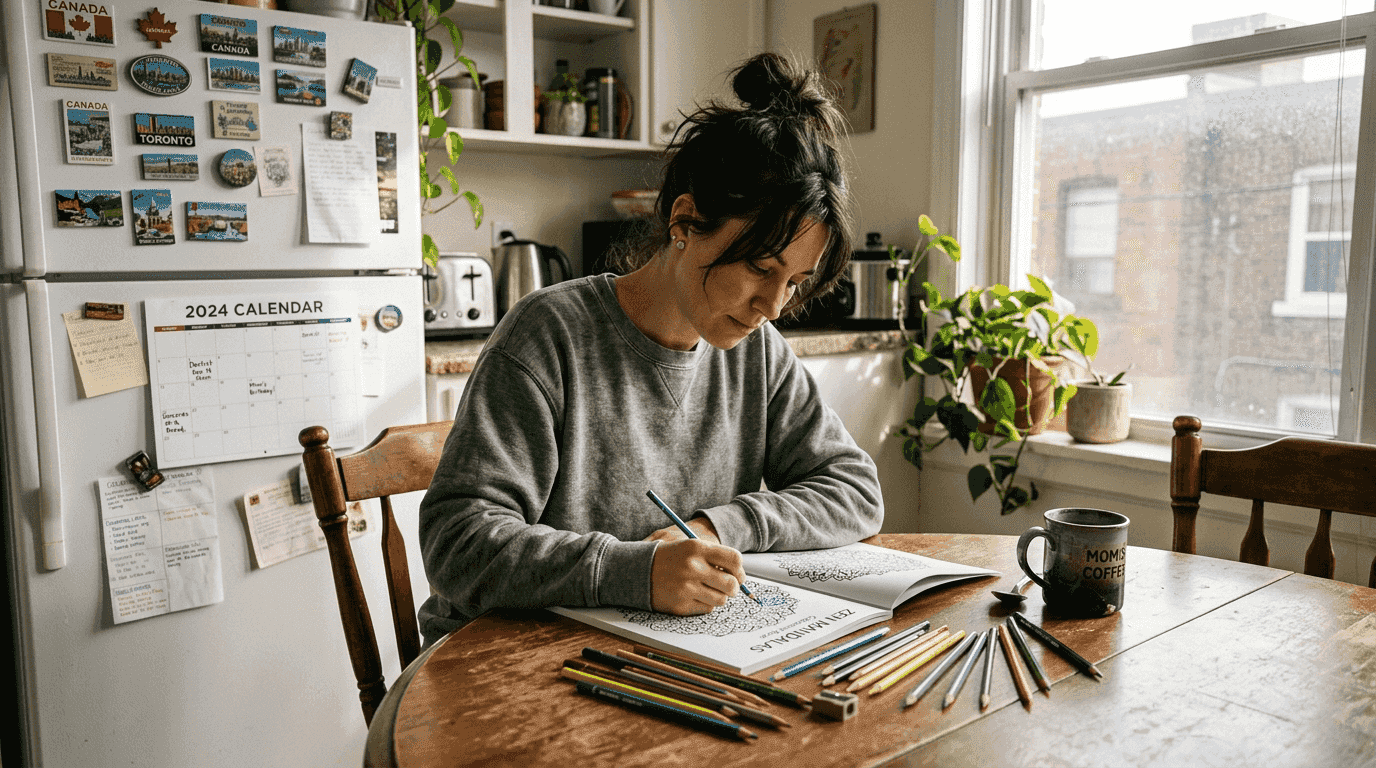
Managing stress and staying present feels impossible when daily demands pull you in every direction. Research shows that mindful colouring reduces cortisol by 25% in just 20 minutes, offering adults a practical creative outlet that enhances emotional regulation and focus. This evidence-backed activity combines artistic expression with mindfulness techniques, creating an accessible path to better mental health without requiring artistic skill or expensive materials. Whether you're seeking anxiety relief, improved concentration, or simply a moment of calm, adult colouring delivers measurable benefits that transform how you process stress and engage with the present moment.
Table of Contents
- How Adult Colouring Supports Mindfulness And Emotional Regulation
- Stress Relief And Anxiety Reduction Through Mindful Colouring
- Enhanced Focus And Cognitive Benefits Through Adult Colouring
- Comparing Adult Colouring To Other Mindfulness Activities
- Explore Your Creativity With Crayono's Free AI Colouring Pages
- Frequently Asked Questions
Key takeaways
| Point | Details |
|---|---|
| Mindfulness enhancement | Colouring mandalas cultivates present-moment awareness and improves emotional regulation strategies |
| Stress hormone reduction | Mindful colouring lowers cortisol levels and decreases amygdala activity as effectively as meditation |
| Cognitive focus improvement | Fine motor engagement during colouring interrupts rumination and strengthens attentional control |
| Accessible creative practice | No artistic training required, making it ideal for beginners seeking stress relief through creativity |
How adult colouring supports mindfulness and emotional regulation
Mindfulness means paying attention to the present moment without judgment, and colouring provides a structured way to practise this skill. When you focus on selecting colours, staying within lines, and observing patterns emerge, your mind anchors in the now rather than dwelling on past regrets or future worries. Colouring mandalas enhances mindfulness and promotes adaptive emotional regulation strategies by creating a meditative state through repetitive, focused action.
The physical act of colouring engages fine motor skills that require concentration, pulling your attention away from anxious thoughts. This sensory engagement helps you recognise and process emotions without becoming overwhelmed by them. Research demonstrates that adults who colour mandalas show improved attachment security and better emotional coping mechanisms compared to those who engage in unstructured drawing.
Your emotional regulation improves because colouring interrupts negative rumination patterns. Instead of cycling through worries, you redirect mental energy toward choosing colour combinations and completing sections of your design. This shift creates psychological distance from stressors whilst maintaining engagement in a productive, calming activity.
Pro Tip: Start with geometric patterns or mandalas rather than complex scenes to maximise the mindfulness benefit through repetitive, symmetrical designs.
Consider these mindfulness benefits of regular colouring practice:
- Develops sustained attention by requiring focus on small details for extended periods
- Creates a judgment-free zone where mistakes become part of the creative process
- Builds awareness of physical sensations like grip pressure and hand movement
- Establishes a portable mindfulness practice you can access anywhere
Exploring free AI colouring pages lets you customise designs that match your current emotional needs, whether you want calming nature scenes or energising abstract patterns.
Stress relief and anxiety reduction through mindful colouring
Stress manifests physically through elevated cortisol and heightened amygdala activity, but mindful colouring addresses both these physiological markers. Studies comparing mindful colouring to loving-kindness meditation found that colouring reduces anxiety equally to established meditation practices, making it a viable alternative for people who struggle with traditional sitting meditation. The combination of creative expression and focused attention creates a relaxation response that counteracts your body's stress mechanisms.
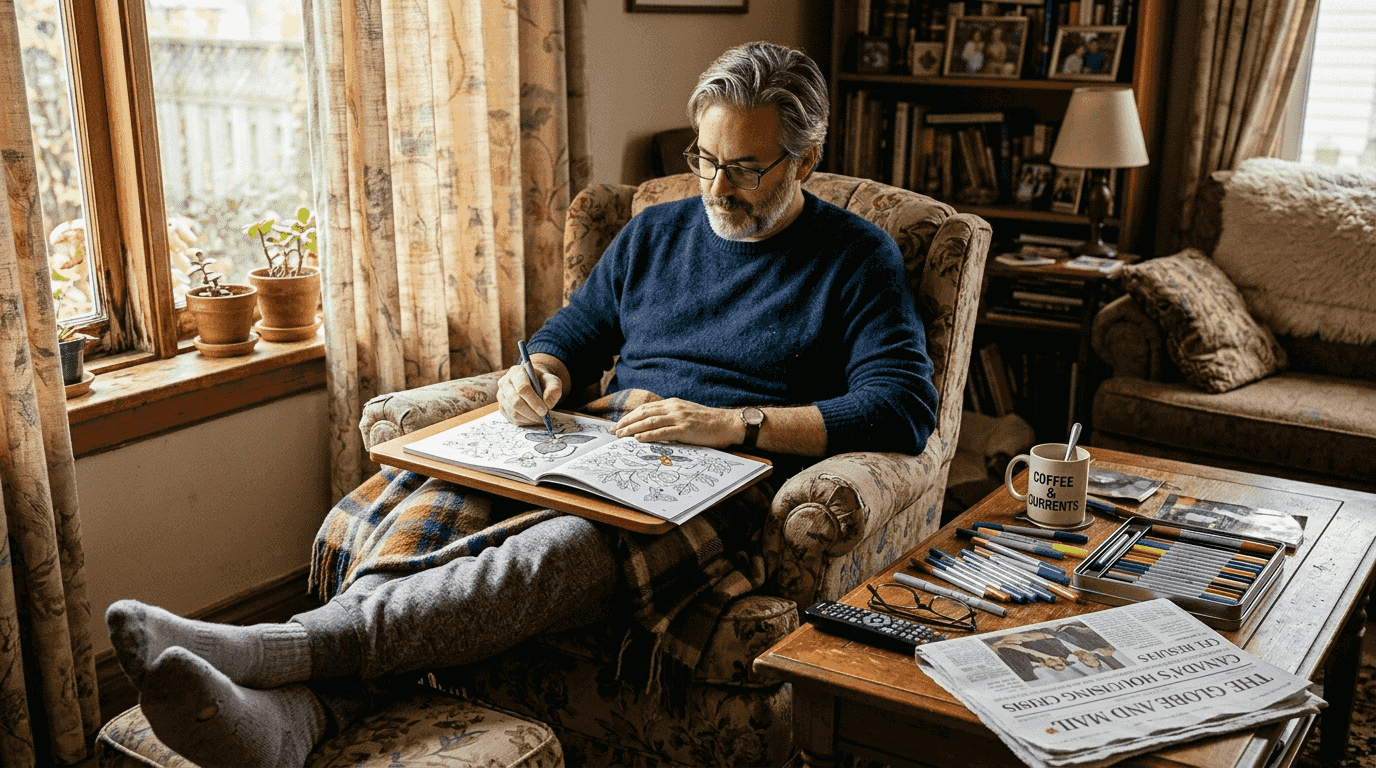
Your amygdala, the brain region responsible for processing fear and anxiety, shows decreased activity during colouring sessions. This reduction happens because the task occupies your prefrontal cortex with decision-making about colours and patterns, effectively crowding out the mental space anxiety typically occupies. Teachers who incorporated mindful colouring into their routines reported improved resilience and emotional well-being, even during high-stress periods.
The beauty of colouring for stress relief lies in its accessibility. You don't need special training, expensive equipment, or a quiet meditation space. Fifteen minutes with coloured pencils and a design provides measurable anxiety reduction that accumulates with regular practice.
"Mindful colouring serves as a healthy distraction that redirects attention from anxious thoughts to present-moment sensory experience, creating immediate relief whilst building long-term coping skills."
These stress-reducing mechanisms work together during each colouring session:
- Rhythmic hand movements activate the parasympathetic nervous system, triggering relaxation
- Visual focus on colours and patterns provides a break from verbal rumination
- Completion of sections delivers small accomplishments that boost mood
- Predictable structure creates psychological safety during uncertain times
Accessing mindful colouring resources ensures you always have fresh designs matched to your stress level and available time.
Enhanced focus and cognitive benefits through adult colouring
Colouring demands simultaneous engagement of multiple cognitive systems, creating a unique mental workout that strengthens focus. Your brain coordinates visual processing, fine motor control, colour selection, and spatial awareness whilst maintaining attention on the overall design. This multi-system activation explains why colouring reduces worry and improves concentration by engaging immersive focus that crowds out distracting thoughts.
Attentional control improves because colouring requires you to notice when your mind wanders and gently redirect focus back to the page. This practice mirrors formal mindfulness meditation but feels more natural for people who find sitting still mentally challenging. Each time you return attention to your colouring, you strengthen the neural pathways responsible for sustained concentration.
The cognitive benefits extend beyond the colouring session itself. Regular practice builds your capacity to maintain focus during other tasks, reducing mental fatigue and improving work performance. Adults who colour consistently report better ability to complete projects and resist digital distractions.
Pro Tip: Colour for 20-30 minutes before cognitively demanding tasks to prime your focus and clear mental clutter.
| Benefit type | Primary mechanism | Observable outcome |
|---|---|---|
| Cognitive focus | Fine motor engagement | Reduced mind wandering, improved task completion |
| Emotional regulation | Present-moment awareness | Lower anxiety, better stress response |
| Creative expression | Colour choice freedom | Enhanced mood, increased self-efficacy |
| Sensory grounding | Tactile and visual input | Decreased rumination, improved body awareness |
These focus-enhancing effects manifest through specific practices:
- Choosing intricate designs challenges your attention span progressively
- Completing sections provides concrete feedback about sustained effort
- Noticing colour relationships develops visual discrimination skills
- Managing mistakes builds cognitive flexibility and problem-solving
Exploring adult colouring cognitive benefits through personalised AI-generated designs lets you target specific focus challenges with appropriate complexity levels.
Comparing adult colouring to other mindfulness activities
Choosing the right mindfulness practice depends on your goals, available time, and personal preferences. Mindful colouring offers unique advantages compared to meditation and art therapy, though each serves distinct purposes. Understanding these differences helps you select the approach that fits your lifestyle and delivers the benefits you're seeking.
Meditation provides deep internal insight and requires minimal equipment, but many people struggle with the lack of external focus. Your mind may wander more during sitting meditation because there's no anchor beyond breath or body sensations. Mindful colouring matches meditation in anxiety reduction whilst offering a tangible activity that feels more accessible to beginners.
Art therapy incorporates professional guidance to process trauma and complex emotions through creative expression. Whilst powerful for deep psychological work, it requires a trained therapist and focuses on emotional exploration rather than simple stress relief. Colouring provides similar creative engagement without the intensity or cost of formal therapy.
| Activity | Accessibility | Primary benefit | Time commitment | Skill requirement |
|---|---|---|---|---|
| Mindful colouring | High, minimal cost | Stress relief, focus | 15-30 minutes | None |
| Meditation | High, free | Deep awareness | 10-45 minutes | Moderate training |
| Art therapy | Low, requires therapist | Emotional processing | 60+ minutes | Professional guidance |
| Yoga | Moderate, needs space | Physical and mental | 30-90 minutes | Basic instruction |
Consider these factors when choosing your mindfulness approach:
- Colouring works best when you need immediate stress relief with visible progress
- Meditation suits those seeking internal insight without external props
- Art therapy addresses deep emotional wounds requiring professional support
- Combining practices creates a comprehensive mindfulness routine
Browsing mindfulness practice options gives you flexibility to match activities to your current needs and energy levels.
Explore your creativity with crayono's free AI colouring pages
Ready to experience these benefits firsthand? Crayono transforms your creative ideas into personalised colouring pages in seconds using AI technology. Simply describe any scene, pattern, or design you imagine, and the platform generates ready-to-colour line art tailored to your vision. This customisation ensures your colouring practice stays fresh and aligned with your current interests.
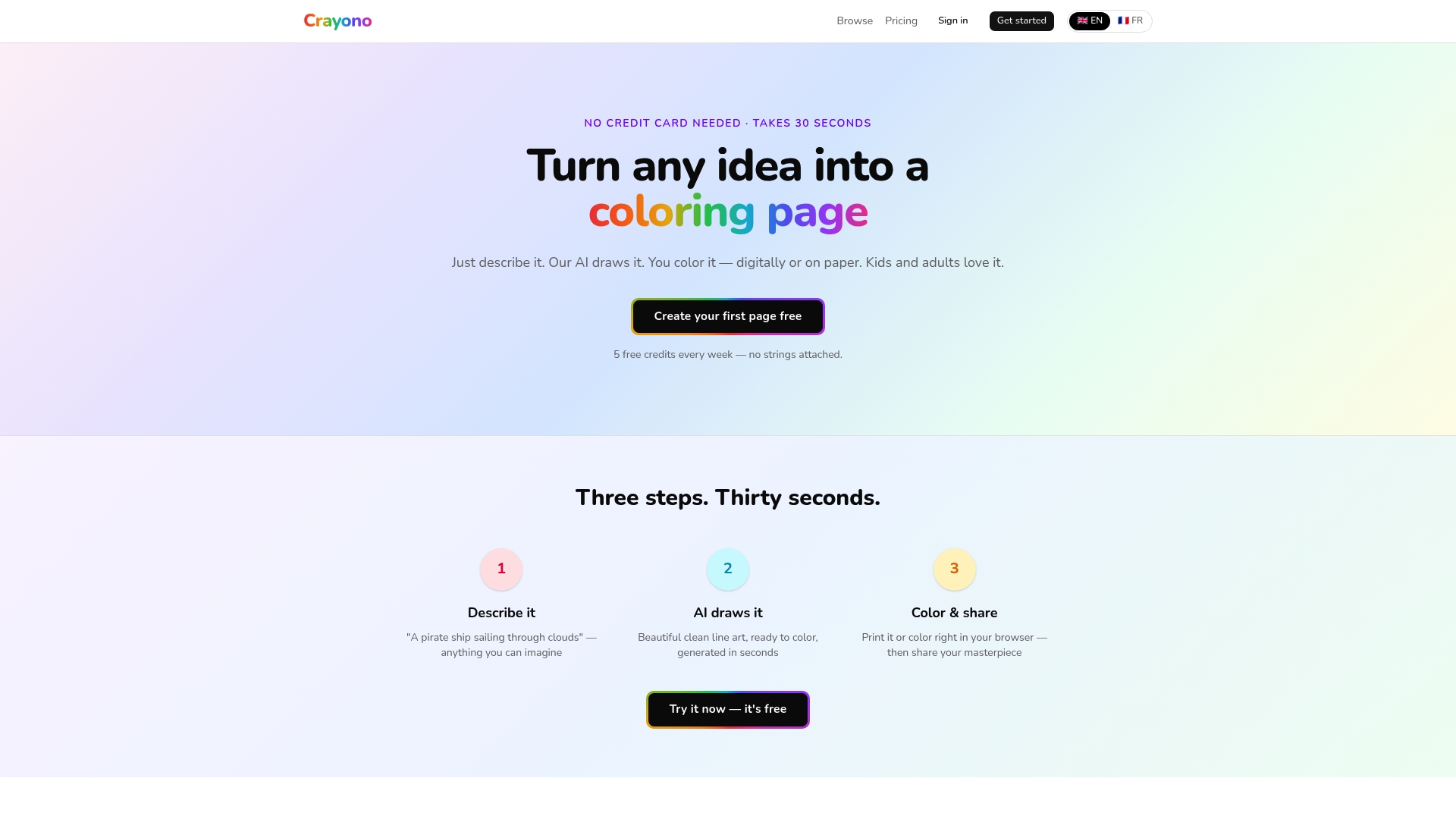
The platform requires no artistic skill or expensive supplies to start. You receive free weekly credits to generate new designs, making it easy to maintain a regular mindfulness practice without financial barriers. Whether you prefer digital colouring or printing pages for traditional media, Crayono adapts to your preferred creative method.
Explore free AI colouring pages designed specifically for adult stress relief and mindfulness. Each customised design supports your journey toward better focus, emotional regulation, and creative expression. Visit the Crayono homepage to generate your first personalised colouring page and discover how this accessible practice transforms your approach to stress management.
Frequently asked questions
What mental health benefits does adult colouring provide?
Adult colouring reduces cortisol levels by up to 25%, decreases amygdala activity associated with anxiety, and improves emotional regulation through mindful focus. Regular practice builds attentional control, interrupts negative rumination, and creates a portable stress-relief tool accessible anywhere. These benefits accumulate with consistent use, supporting long-term mental health alongside immediate relaxation.
How does adult colouring differ from art therapy?
Adult colouring is a self-directed mindfulness activity requiring no professional guidance, whilst art therapy involves a trained therapist who uses creative expression to process trauma and complex emotions. Colouring focuses on stress relief and present-moment awareness through structured designs. Art therapy explores deeper psychological issues through open-ended creative work, making it more intensive but also more specialised for emotional healing.
Can adult colouring reduce anxiety as effectively as meditation?
Research comparing mindful colouring to loving-kindness meditation found equivalent anxiety reduction in both practices. Colouring may feel more accessible for beginners who struggle with traditional meditation's lack of external focus. The combination of fine motor engagement and visual concentration creates a meditative state without requiring extensive training, making it an effective alternative for people seeking anxiety relief through creative activity.
What materials are best for starting adult colouring?
Begin with coloured pencils for precise control and easy blending, paired with medium-weight paper that prevents bleed-through. Gel pens work well for intricate designs, whilst markers suit bold, vibrant colouring. Choose designs with varying complexity levels so you can match difficulty to your available focus and energy. Quality materials enhance the sensory experience but aren't necessary for gaining mindfulness benefits.
Is mindful colouring suitable for beginners?
Mindful colouring requires no artistic training or special skills, making it ideal for beginners seeking stress relief. Start with simpler geometric patterns or mandalas to build confidence before progressing to complex scenes. The structured nature of colouring pages removes performance pressure whilst still engaging creativity. Focus on the process rather than the outcome to maximise mindfulness benefits regardless of your experience level.