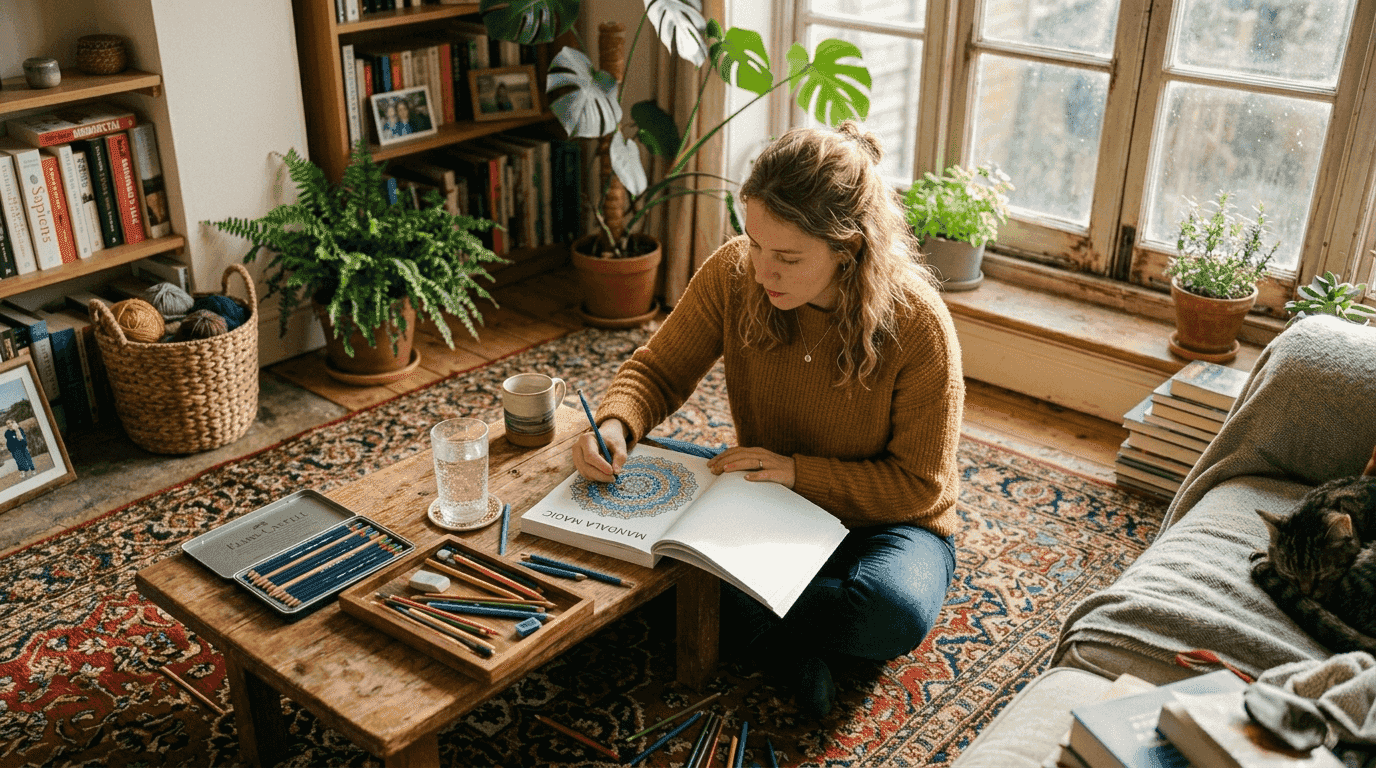
Colouring isn't just a nostalgic pastime from childhood. Recent research reveals that colouring activates measurable neurophysiological changes that reduce anxiety and promote relaxation in adults. When you colour mindfully, your brain enters a meditative state that lowers cortisol levels, calms the amygdala, and synchronises both hemispheres for whole-brain relaxation. This guide explores the science behind colouring's stress-relieving power and shows you practical ways to incorporate this accessible mindfulness practice into your daily routine for better emotional wellbeing and resilience.
Table of Contents
- How Colouring Reduces Stress And Anxiety
- Mindfulness And Colouring: A Powerful Combination
- Choosing Colouring Materials And Styles For Stress Relief
- Incorporating Colouring Into Your Daily Stress Relief Routine
- Discover Free AI Colouring Pages To Start Relaxing Today
- Frequently Asked Questions
Key takeaways
| Point | Details |
|---|---|
| Brain synchronisation | Colouring engages both hemispheres simultaneously, promoting whole-brain relaxation and reducing amygdala activity |
| Meditation alternative | Mindful colouring produces anxiety reduction comparable to traditional meditation practices without extensive training |
| Accessible self-care | Requires no artistic skill or expensive materials, making it an easy entry point for creative stress relief |
| Cortisol reduction | Mandala colouring specifically lowers stress hormone levels more effectively than unstructured colouring |
| Measurable benefits | Regular sessions decrease state anxiety, improve mood regulation, and build resilience against burnout |
How colouring reduces stress and anxiety
When you pick up coloured pencils and focus on filling intricate patterns, something remarkable happens in your brain. Colouring activates the relaxation response by engaging both hemispheres simultaneously, creating whole-brain synchronisation that calms your nervous system. This bilateral stimulation reduces activity in the amygdala, your brain's fear centre, whilst lowering heart rate and blood pressure.
The repetitive motion of colouring creates a rhythm that stabilises emotions and regulates mood naturally. Your prefrontal cortex, responsible for planning and decision-making, gets a break from constant problem-solving whilst your motor cortex and visual processing centres take over. This shift allows anxious thoughts to fade as you focus entirely on colour selection and staying within lines.
Research confirms these effects are measurable. A study found that guided drawing reduced anxiety and increased physiological relaxation markers in participants. The structured nature of adult colouring books provides the perfect framework for this therapeutic effect, demanding enough concentration to quiet mental chatter without overwhelming your cognitive resources.
Pro Tip: Choose patterns with moderate complexity for optimal stress relief. Overly simple designs won't engage your focus enough, whilst extremely intricate ones might increase frustration rather than reduce it.
The neurological benefits extend beyond the colouring session itself. Regular practice strengthens your ability to enter relaxed states quickly, building a mental pathway that becomes easier to access over time. Think of it as training your nervous system to recognise and respond to calming activities more efficiently.
Key mechanisms at work:
- Bilateral brain activation creates neural harmony and reduces stress response
- Focused attention on present-moment activity mimics meditation's calming effects
- Repetitive hand movements trigger parasympathetic nervous system activation
- Visual engagement with colour and pattern stimulates reward centres in the brain
"The combination of focused attention, repetitive motion, and creative choice-making creates a perfect storm for stress reduction. Your brain interprets this activity as safe and restorative, triggering a cascade of calming neurochemicals."
Mindfulness and colouring: a powerful combination
Mindfulness means paying attention to the present moment without judgement, and colouring naturally facilitates this state. When you colour mindfully, you're not just filling spaces with colour. You're creating a structured meditation practice that reduces anxiety as effectively as traditional meditation techniques.
The beauty of mindful colouring lies in its accessibility. You don't need years of meditation training or special equipment. Simply bringing intentional awareness to the sensory experience of colouring transforms it from a casual activity into a powerful stress management tool. Participants who practised mindful colouring reported feeling less stressed and more resilient against burnout.
Integrating mindfulness into your colouring practice amplifies the neurophysiological benefits discussed earlier. When you combine focused attention with the brain's natural relaxation response to colouring, you create a synergistic effect that manages emotion regulation difficulties more effectively than either practice alone.
Steps for a mindful colouring session:
- Prepare your space by removing distractions and gathering materials within easy reach
- Take three deep breaths to centre yourself before touching pencil to paper
- Notice the texture of the paper and the weight of your colouring tool in your hand
- Choose colours intuitively, paying attention to how each shade makes you feel
- Observe thoughts and emotions that arise without trying to change them
- Return your focus gently to the physical sensations of colouring whenever your mind wanders
Pro Tip: Practise a brief body scan or breathing exercise before starting to colour. This primes your nervous system for deeper relaxation and maximises anxiety reduction benefits.
The meditative flow state that emerges during mindful colouring feels different from ordinary concentration. Time seems to shift, worries fade into the background, and you experience a sense of calm presence. This accessible entry point to meditation makes structured colouring activities particularly valuable for people who struggle with traditional sitting meditation or find it difficult to quiet their minds.
Consider enrolling in emotion regulation skills courses if you want to deepen your mindfulness practice alongside colouring. These complementary approaches work together to build comprehensive stress management capabilities.
Choosing colouring materials and styles for stress relief
Not all colouring experiences produce equal stress relief benefits. Adult colouring books contain intricate patterns requiring focus and concentration, which helps activate the relaxation response more effectively than simple designs. Your choice of style and materials significantly impacts both engagement level and therapeutic outcomes.
Mandala colouring deserves special attention for stress management. Research shows that colouring mandalas significantly reduces anxiety and cortisol levels more than unstructured colouring. The circular, symmetrical patterns guide your attention inward whilst the repetitive geometric shapes create a meditative rhythm that calms racing thoughts.
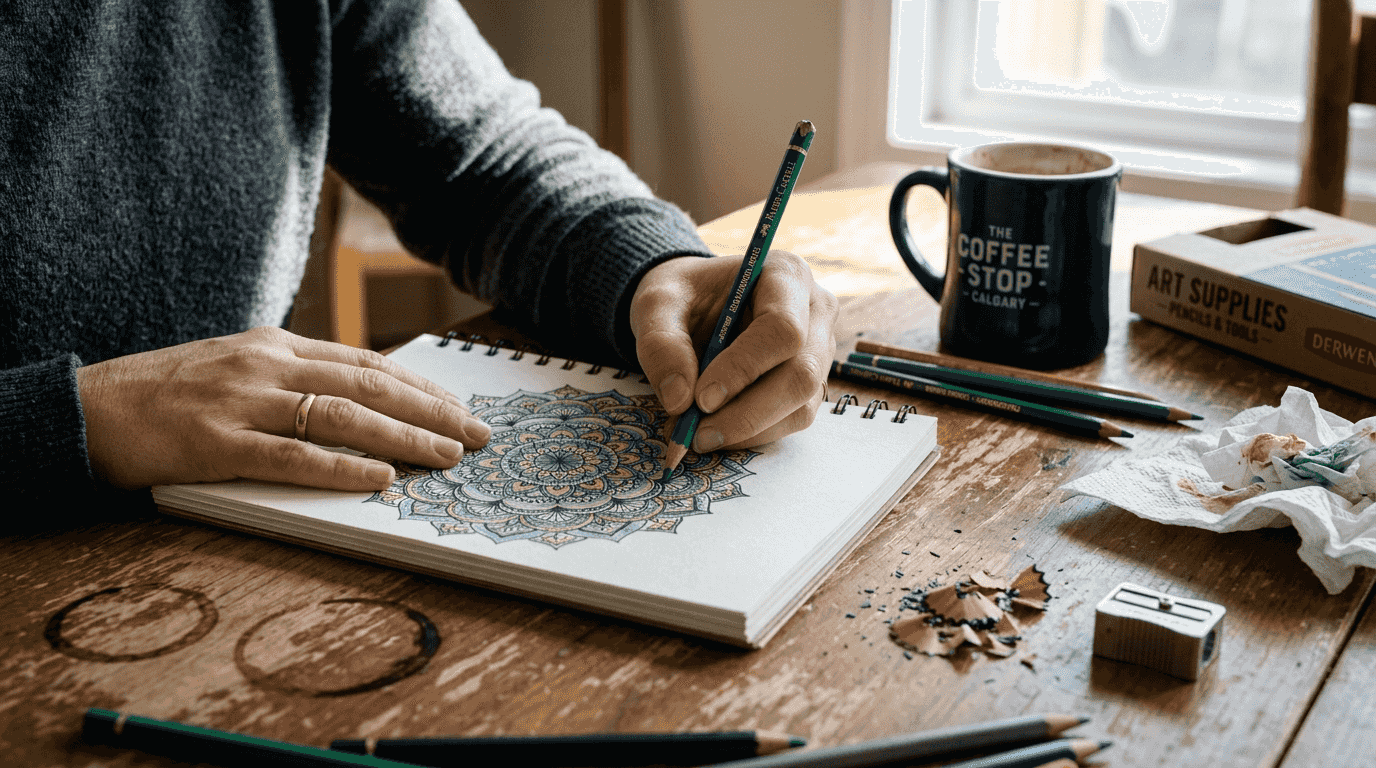
Recently, cosy colouring books have gained popularity for their relaxing qualities. These feature familiar, comforting scenes like cottages, gardens, and peaceful landscapes that evoke nostalgia and safety. The style you choose should match your current emotional needs and personal preferences.
| Style | Complexity | Best For | Stress Relief Mechanism |
|---|---|---|---|
| Mandalas | High | Deep meditation, cortisol reduction | Geometric repetition, inward focus |
| Intricate patterns | Medium to High | Sustained concentration, mental quiet | Detailed focus, creative flow |
| Cosy scenes | Low to Medium | Comfort, gentle relaxation | Nostalgic associations, simple pleasure |
Materials matter too. Coloured pencils offer precise control and a satisfying tactile experience as you layer colours. Markers provide bold, immediate colour saturation that some find energising. Gel pens create smooth, gliding sensations that enhance the meditative quality. Experiment to discover which tools enhance your personal relaxation response.
Pro Tip: Keep a variety of colouring styles and tools available so you can match your choice to your mood. Feeling anxious? Reach for mandalas. Need gentle comfort? Choose cosy scenes. Want creative engagement? Try intricate patterns.
Accessibility has improved dramatically with platforms offering free AI colouring pages that let you generate custom designs matching your exact preferences. This personalisation enhances creative flow and ensures you always have fresh, appealing patterns ready when stress strikes.
Incorporating colouring into your daily stress relief routine
Transforming colouring from an occasional activity into a consistent stress management practice requires intentional integration into your lifestyle. The good news? State anxiety significantly decreases within each colouring session, making even brief practices worthwhile.
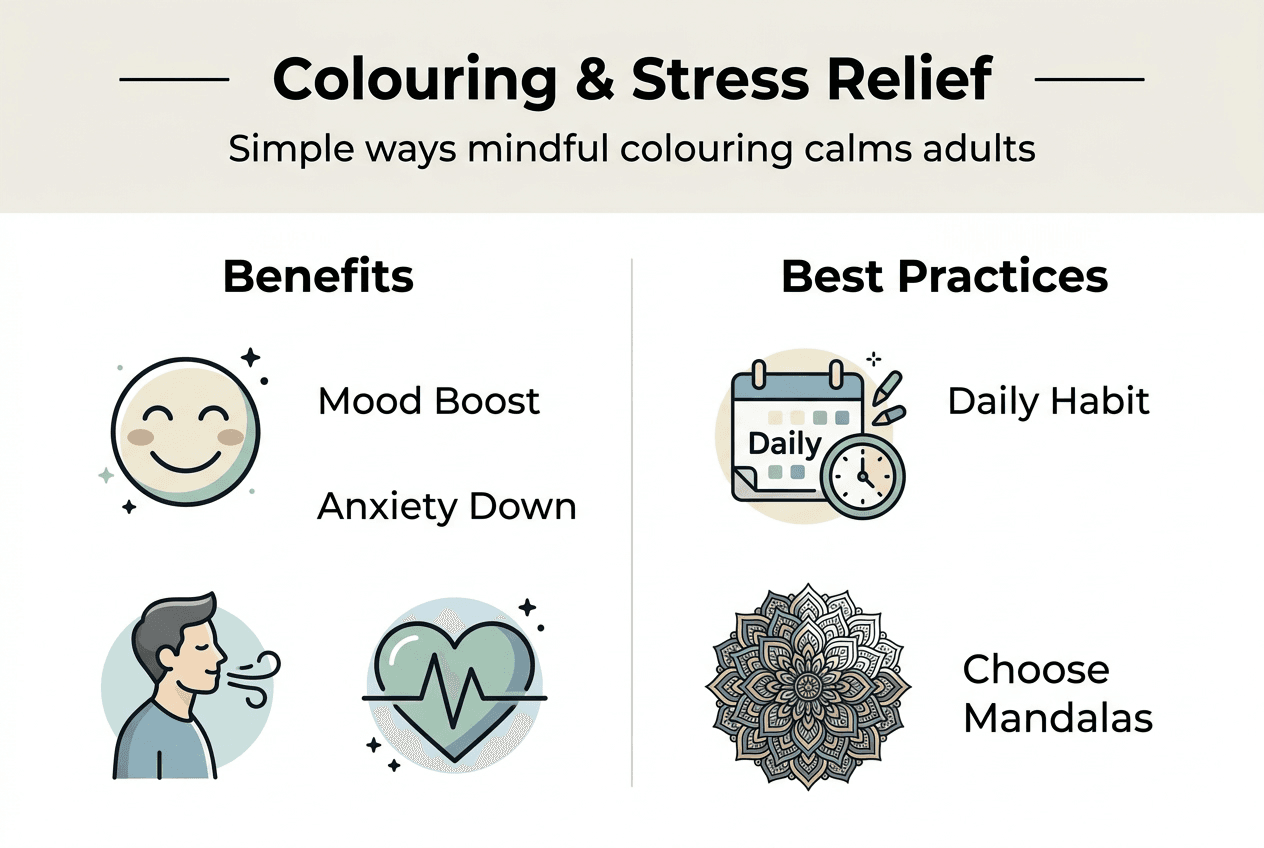
Start small rather than committing to lengthy sessions that feel overwhelming. Ten to fifteen minutes of focused colouring during your lunch break can reset your nervous system and improve afternoon productivity. Evening sessions before bed help transition from the day's demands into restful sleep.
Sample routines for different lifestyles:
- Morning ritual: Colour for 10 minutes with coffee to set a calm tone before work begins
- Midday reset: Take a colouring break instead of scrolling social media during lunch
- Evening wind-down: Spend 20 minutes colouring after dinner to process the day's stress
- Weekend sessions: Dedicate an hour on Sunday for deeper creative engagement and reflection
Creating a dedicated colouring space enhances your practice significantly. Choose a comfortable spot with good lighting where you won't be interrupted. Keep your materials organised and easily accessible so you can begin without friction when stress levels rise.
Pro Tip: Set a gentle timer for your colouring sessions. This removes the need to check the clock, allowing you to surrender fully to the present moment without worrying about time.
The benefits compound with regular practice. You'll notice increased motivation as completed pages accumulate, providing visual evidence of your commitment to self-care. The happiness derived from creative accomplishment boosts mood whilst reduced cortisol levels improve overall resilience. Colouring offers a low-barrier entry point to creative expression that supports emotional wellbeing without requiring artistic talent.
- Track your mood before and after sessions to reinforce the connection between colouring and stress relief
- Share completed work with supportive friends or online communities for satisfaction and accountability
- Rotate between different pattern styles to maintain novelty and engagement
- Combine colouring with other relaxation practices like art therapy techniques for comprehensive stress management
Access to varied designs keeps your practice fresh and engaging. AI colouring resources provide unlimited variety, ensuring you never run out of appealing patterns that match your current emotional needs and aesthetic preferences.
Discover free AI colouring pages to start relaxing today
Ready to experience the stress-relieving benefits of mindful colouring? Free AI colouring pages offer an easy starting point with designs tailored to different moods, skill levels, and therapeutic needs. Generate custom patterns in seconds by describing exactly what you want to colour, from calming mandalas to cosy cottage scenes.
The convenience of printable designs means you can access quality colouring pages anytime stress strikes, without trips to shops or waiting for deliveries. Whether you're a complete beginner or an experienced colourist, adult colouring books created through AI technology provide the perfect balance of structure and creative freedom for effective stress relief.
Explore features designed specifically to support personal creative expression whilst maximising relaxation benefits. No artistic skills required, just your willingness to slow down, focus on the present moment, and let the therapeutic power of colour work its magic on your nervous system.
Frequently asked questions
Does colouring really reduce stress scientifically?
Yes, research confirms colouring produces measurable physiological changes including reduced heart rate, lower blood pressure, decreased amygdala activity, and reduced cortisol levels. Studies show anxiety decreases significantly during colouring sessions, with effects comparable to meditation.
How does mindful colouring differ from casual colouring?
Mindful colouring involves intentional present-moment awareness of sensations, emotions, and the colouring process itself, whilst casual colouring might occur whilst watching television or chatting. The mindful approach amplifies stress relief benefits by combining focused attention with the brain's natural relaxation response to repetitive creative activity.
Which colouring styles work best for anxiety relief?
Mandala colouring produces the strongest anxiety and cortisol reduction due to geometric repetition and inward focus. Intricate patterns requiring sustained concentration also effectively quiet mental chatter. Choose complexity matching your current stress level, as overly difficult designs might increase frustration rather than reduce it.
How often should I colour for stress management?
Daily 10 to 15 minute sessions provide consistent stress relief and build resilience over time. Longer 20 to 30 minute sessions several times weekly offer deeper relaxation and creative satisfaction. The key is regularity rather than duration, as benefits accumulate with consistent practice.
Can I combine colouring with other mindfulness practices?
Absolutely. Pairing brief breathing exercises or body scans before colouring enhances relaxation benefits. Some people alternate between colouring sessions and traditional meditation, whilst others integrate gentle music or aromatherapy. Experiment to discover combinations that maximise your personal stress relief and emotional regulation.